Generative AI is revolutionizing small retail and service industries by offering high-impact solutions that go far beyond simple chatbots. By integrating AI-driven image creation, content generation, adaptive learning, automated scheduling, and sentiment analysis, small businesses can streamline operations, boost customer engagement, and increase revenue. Here are five powerful generative AI applications tailored for small retail and service businesses.
1. AI-Powered Visual Product Mockups
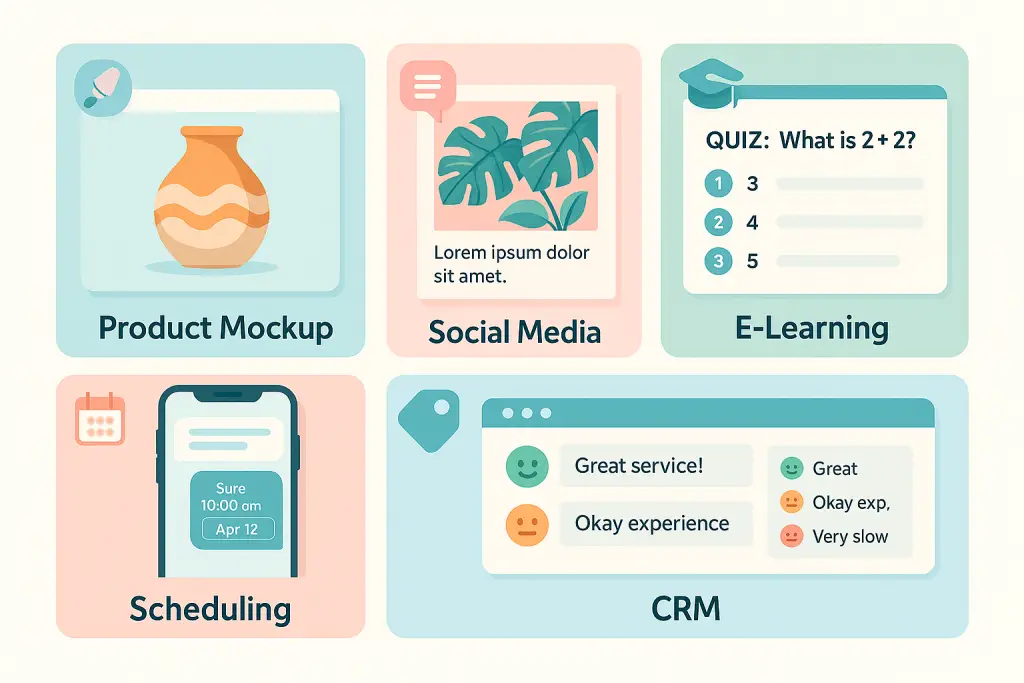
Creating professional product mockups traditionally requires time and budget for photoshoots or graphic design. With generative AI image tools, you can generate realistic, on-brand product visuals from text prompts in minutes. A handcrafted candle shop, for example, can describe “a concrete vessel candle with eucalyptus leaves backdrop” and receive multiple high-resolution mockups ready for social media, e-commerce listings, and promotional materials. This AI-driven design workflow accelerates product launches, cuts mockup costs by up to 70 percent, and enables rapid A/B testing of packaging and styling.
2. Branded Caption and Content Generation
Maintaining consistent brand voice across social media, email campaigns, and website copy is essential for customer recognition. Generative AI can produce keyword-rich captions, headlines, and blog outlines that match your brand’s tone. By training a lightweight AI model on your existing marketing assets, you can automate copywriting tasks—drafting Instagram captions, crafting email subject lines, or generating blog post titles—in seconds. This AI content engine reduces writer’s block, ensures on-brand messaging, and frees up your marketing team to focus on strategy rather than first drafts.
3. Interactive AI-Driven Training and Learning Modules
Employee training and customer education benefit from personalized, interactive experiences. Generative AI can power adaptive learning modules that auto-generate quiz questions, tailor explanations, and update lesson plans in real time based on user input. A boutique interior design studio, for instance, could deploy an AI-enabled tutorial that teaches color theory and furniture arrangement customized to each learner’s progress. This AI training platform boosts knowledge retention, reduces onboarding time, and enhances customer satisfaction with self-paced, AI-powered support.
4. Conversational AI Appointment Scheduling
Reducing scheduling friction and no-show rates directly impacts small business revenue. Integrate a conversational AI scheduler on your website, mobile app, or messaging channels to handle appointment booking, rescheduling, and reminders. A wellness spa can let clients interact with an AI assistant that proposes available time slots, confirms bookings, and sends automated SMS or email notifications. This seamless AI scheduling solution improves client experience, cuts administrative workload, and can decrease no-show rates by up to 30 percent.
5. AI-Powered Sentiment Analysis for Customer Feedback
Understanding customer sentiment in reviews, support tickets, and social media comments is critical for small businesses. Generative AI can analyze text data, categorize feedback as positive, neutral, or negative, and tag records within your CRM automatically. A local café might use AI sentiment analysis to surface praise about seasonal menu items for marketing, flag negative comments for rapid response, and identify emerging trends in customer preferences. This data-driven approach to customer feedback enables proactive service improvements and targeted promotions.
Implementing Generative AI Use Cases in Your Business
-
Identify a high-priority use case that aligns with your business goals, such as improving design workflows or reducing no-shows.
-
Choose a low-code or managed AI platform that offers quick integration and minimal technical overhead.
-
Run a pilot project with clear success metrics, like time saved, cost reduction, or engagement lift.
-
Gather user feedback and performance data to refine prompts, workflows, and integrations.
-
Scale successful pilots across departments and integrate with existing tools for compounding benefits.
Generative AI empowers small retail and service businesses to compete with larger enterprises by automating key processes, elevating marketing efforts, and delivering exceptional customer experiences. By exploring these five creative AI applications, you can unlock operational efficiency, fuel growth, and establish your brand as an innovator in your industry.